Aion Institute Professional Certificate Programs
Do you miss graduate school? Aion Institute’s certificate programs are scholarly and immersive, self-contained educational courses offered live online, webinar-style, with well-informed learning objectives, readings, and live discussion among participants. The certificates are designed for clinicians, scholars, and seekers who desire more than fragmented training or sterile credentialing. Our offerings combine academic rigor with imaginal richness—inviting participants into a living education that cultivates depth, community, and personal transformation.
The three certificate curricula described on this page represent sequential educational programs of increasing sophistication and complexity. If you didn’t get much psychodynamic training in school, look into our Psychodynamic Respecialization Certificate. If you covered the basics and are thirsty for more, consider our Advanced Foundations Certificate. And if you’re really down for the ultimate journey, you may have an appetite for our Certificate in Integrated Analytical Psychology.
Whether you’re pursuing continuing education credits (CE), building toward specialization, or simply longing for meaningful growth, Aion’s certificates offer flexible, high-quality pathways grounded in psychodynamic, Jungian, and integrative psychological frameworks.
Earn CE Credit While Cultivating Depth
Most certificate courses are eligible for continuing education credit for any licensed clinicians licensed by the California Board of Psychology or Board of Behavioral Sciences (see details here), fulfilling licensure requirements while nourishing the soul of your practice.
Go at Your Own Pace, Grow on Your Own Terms
Our modular structure allows you to move through the curriculum in a rhythm that fits your life. Take one course at a time, or immerse yourself more fully, without pressure.
Participate in Live Grand Rounds & Peer Case Consultation
Our ongoing Grand Rounds offer a rare chance to present de-identified clinical cases in a supportive, skilled community. These case reviews serve as a crucible for integrative insight and professional development.
Belong to Something More
Aion also intends to be create a vibrant online community for the practice of depth psychology. Our courses come with networking and mutual support for coursework and broader clinical, cultural, and philosophical questions through our Discord Channel.

Psychodynamic Respecialization Certificate
The Psychodynamic Respecialization Certificate requires the suite of 100-level courses (26 hours), 6 sessions of Grand Rounds Consultation (AION 999, 12 hours), and at least 8 hours of higher-level courses (400 level) as electives. Depending on the electives chosen, this certificate totals about 46 hours.
Overview
Overview
The Psychodynamic Respecialization Certificate at Aion Institute offers a foundational immersion into the theory, technique, and clinical culture of depth psychotherapy. Designed for clinicians seeking to build or revitalize a psychodynamic orientation, this program integrates classical and contemporary approaches—including psychoanalytic, Jungian, object relations, and relational frameworks.
Through a carefully sequenced suite of courses, participants engage key concepts in developmental theory, personality structure, clinical technique, and philosophical foundations. Emphasis is placed on cultivating conceptual clarity, emotional sensitivity, and an appreciation for the symbolic and relational dimensions of therapeutic work.
Enrollment in any Aion Institute certificate program includes access to our private Discord community—a dedicated virtual space for conversation, collaboration, and connection. Participants can engage with faculty and peers between sessions, share resources, explore clinical and theoretical questions, and take part in ongoing discussions that extend and deepen the learning experience. The community also offers informal study groups, special topic forums, and real-time support, helping foster a sense of belonging within a network of like-minded practitioners committed to soulful, rigorous work.
The curriculum combines academic rigor with creative inquiry, inviting participants into a learning process that is as intellectually challenging as it is personally transformative.
Participants must complete all 100-level courses, six hours of Grand Rounds consultation, and a minimum of eight elective units at the 400-level.
Who This Certificate Is For
The Psychodynamic Respecialization Certificate is designed for licensed mental health professionals, pre-licensed clinicians, and graduate-level practitioners who wish to deepen their clinical orientation through the lens of psychodynamic and depth psychology.
It is particularly well suited for:
Therapists trained in CBT, solution-focused, or other short-term models who feel called to work with deeper unconscious processes, symbolism, and character structure.
Clinicians seeking to transition into depth-oriented psychotherapy, including those interested in psychoanalytic, Jungian, or integrative traditions.
Recent graduates from counseling or social work programs who desire graduate-level enrichment in psychodynamic theory and technique.
Practicing clinicians who want to reconnect with the intellectual and soulful dimensions of therapeutic work in a supportive, rigorous learning environment.
Whether you are respecializing, returning, or renewing, this certificate offers a structured yet spacious path toward clinical fluency in psychodynamic thought—without the rigid institutional confines of traditional training institutes.
Course Catalog
This class includes two two-hour sessions incorporating an overview of some of the more important philosophical, cultural, and scientific contexts leading the development of psychodynamic psychology. Content will include a review of the following philosophical and cultural foundations: ancient systems of spirituality, classical Greek philosophical models such as stoicism, skepticism, and hedonism, as well as neo-platonism, Gnosticism, empiricism, humanism, phenomenology, critical theory, and Zen Buddhism.
AION 102 Psychodynamic Psychotherapy in Theoretical Context (2 sessions, 4 hours, 4 CE, $280/$190/$150). Prerequisite: None
This class includes two two-hour sessions representing an overview of foundational types of talk therapy, including cognitive-behavioral models, contextual models (such as feminist, cross cultural, and Marxist psychotherapy), humanistic and existential models, attachment and trauma models, and psychodynamic perspectives including psychoanalytic and Jungian traditions in context.
AION 103 Introductory Theories and Technique in Psychoanalytic Psychotherapy (2 sessions, 4 hours, 4 CE, $280/$190/$150). Prerequisite: None
The content of this class is organized around the historical development of different perspectives in psychoanalytic theory, tracing the development of Freudian drive theory into object relations, including Klein’s perspectives on the paranoid-schizoid versus depressive position, as well as special topics including observing ego capacity, the development of object relations, the idea of primitive mental states, and Kernberg’s developmental models. The discussions will include readings by Klein, Bion, and Winnicott. Klein, Guntrip, Winnicott, Kohut, the feminist critique of psychoanalysis, and the “developmental tilt.”
AION 104 Introductory Theories and Technique in Jungian Psychotherapy (2 sessions, 4 hours, 4 CE, $280/$190/$150). Prerequisite: None
This class will address some of the more foundational features of Jung’s original theoretical structure, including an overview of Jungian personality structure and function such as ego, Self, persona, shadow, individuation, complexes, and the transcendent function. Jungian perspectives will be discussed in the context of the theory of archetypes and Jung’s autonomous spiritual principle, the collective unconscious, and the teleological and transpersonal qualities of the Jungian perspective.
CHECK BACK LATER FOR DATES
Largely following upon the work of Nancy McWilliams, this course focuses on “level” and “type” of personality organization. Level of personality development will be discussed through the lens of Kernberg’s tripartite model (psychotic, borderline, neurotic) and type of personality organization (such as schizoid, narcissistic, histrionic, or depressive personalities) will be explored as an outcome of defensive style. Therapeutic implications for each defensive style will be explored.
This seminar is designed to deepen clinical insight and sharpen conceptualization skills. Participants will bring forward de-identified clinical cases to present to the group, fostering collaborative exploration and practicing peer consultation. Guided by the instructor, the seminar emphasizes integrative thinking—linking psychodynamic, relational, and developmental perspectives with practical therapeutic strategies. Through open discussion and structured case analysis, attendees will learn to identify key themes, refine diagnostic impressions, and formulate treatment approaches that honor both the complexity of the psyche and the lived experiences of clients. The seminar aims to cultivate both clinical rigor and creative, reflective thinking, providing participants with a space for professional growth and mutual learning. Course will be capped to 5 participants. This seminar is a required component for all of the certificate programs.
Costs & Practicalities
Aion Institute courses generally cost $70 per hour (this may vary slightly). The total cost for the Psychodynamic Respecialization Certificate will therefore total:
- 26 hours total of 100-level courses (described above in the course catalog) – $1820,
- 6 sessions of Grand Rounds Consultation (AION 110, 12 hours total) – $840
- At least 8 hours of higher-level courses (400 level) as electives – $560.
Please note that the fees for electives do vary somewhat, so the above total represents an estimate.
Total cost for the certificate will be approximately $3,220.
The certificate is designed to be taken over time at your own pace. You may choose to cover all this in one year, or draw it out over time.
Most, but not all, of our courses offer CE credit; please see individual course listings for details.
The Aion Institute is approved by the California Psychological Association to provide continuing professional education for psychologists. The Aion Institute maintains responsibility for this program and its content. The California Board of Behavioral Sciences (BBS) now recognizes CE credit offered by any CPA-approved provider for license renewal for its licensees.
Advanced Foundations in Psychodynamic Psychotherapy Certificate
The Advanced Foundations in Psychodynamic Psychotherapy Certificate requires the suite of 200-level courses (28 hours), 6 sessions of Grand Rounds Consultation (AION 999, 12 hours), and at least 8 hours of higher-level courses (400 level) as electives (8 hours). Depending on the electives taken, this certificate totals about 48 hours.
Overview
Overview
This certificate program provides an in-depth immersion in contemporary psychodynamic theory and clinical practice. Building upon foundational training, it integrates perspectives from object relations, self psychology, and Jungian analysis, while addressing the developmental underpinnings of personality, anxiety, and trauma. Participants will gain advanced conceptual tools for case formulation and therapeutic engagement, supported by clinical consultation and elective coursework in emerging psychodynamic thought. The curriculum combines academic rigor with creative inquiry, inviting participants into a learning process that is as intellectually challenging as it is personally transformative. Through structured study and shared reflection, this is a passage toward becoming a more attuned companion to suffering and transformation
Enrollment in any Aion Institute certificate program includes access to our private Discord community—a dedicated virtual space for conversation, collaboration, and connection. Participants can engage with faculty and peers between sessions, share resources, explore clinical and theoretical questions, and take part in ongoing discussions that extend and deepen the learning experience. The community also offers informal study groups, special topic forums, and real-time support, helping foster a sense of belonging within a network of like-minded practitioners committed to soulful, rigorous work.
To complete this certificate, participants must complete all 200-level courses, six hours of Grand Rounds consultation, and a minimum of eight elective units at the 400-level.
Who This Certificate Is For
This certificate is ideal for licensed clinicians, pre-licensed professionals, and advanced graduate students who have prior exposure to psychodynamic or depth psychological theory and are seeking to deepen their clinical perspective. It is particularly suited to therapists drawn to relational, developmental, and archetypal approaches to healing. Participants should be ready to engage both intellectually and reflectively, as the curriculum invites an integration of theory, personal insight, and clinical application.
This program serves as a bridge between foundational training and more advanced or integrative work, and is also appropriate for experienced practitioners seeking to revitalize their practice through exposure to contemporary developments in psychodynamic and Jungian thought.
It is particularly well suited for:
Therapists who attended graduate programs which emphasized psychodynamic perspectives, who wish to further develop their craft.
Therapists who desire deeper expertise in psychodynamic practice without committing to the “orthodoxy” of a training institute.
Clinicians who already practice psychodynamically informed psychotherapy and want to reconnect with the intellectual and soulful dimensions of therapeutic work in a supportive, rigorous learning environment.
Whether you are respecializing, returning, or renewing, this certificate offers a structured yet spacious path toward clinical fluency in psychodynamic thought—without the rigid institutional confines of traditional training institutes.
Course Catalog
Please note that details of course offerings will shift over time; please check here for updates.
This course builds upon the psychoanalytic perspectives addressed in AION 101, and elaborates the transition from Object Relations to Self Psychology, and the development of relational psychoanalysis. Specific topics will include psychoanalytic models of self, the developmental scaffolding of anxiety states and their relationship to character structure, and the relationship between object relations and attachment. This course will include readings by Guntrip, Kohut, Ogden, Bion, and Grotstein.
This course builds upon the analytical perspectives addressed in AION 104, and continues to elaborate an exploration of the “classical” Jungian perspectives, especially as articulated by Edinger and Jacobi, and Jung’s orientation to the philosophy of Kant. The discussion will include an exploration of the principle of dissociation intrinsic to Jungian theory, and its connection to Pierre Janet. Special topics will include Jungian perspectives on dreams, active imagination, and amplification.
CHECK BACK HERE FOR DATES
This course approaches personality development as an epiphenomenon of attachment experience and temperament, and specifically focuses on the role of primitive mental states in attachment formation. Course content will focus on the developmental scaffolding of anxiety states and their complex relationships with attachment styles, and how these attachment styles inform the development of adult personality. The theoretical context for this course will include object relations, self psychology, and Jungian perspectives.
This course explores the relationships among attachment and trauma, and approaches trauma as a developmental crucible, including the developmental impact of early trauma. A primary focus will be current neurobiological models of trauma and its progressive effects across the lifespan. Special topics will include splitting, dissociation, and introjection, as well as psychodynamic outcomes of trauma.
CHECK BACK HERE FOR DATES
AION 999 Grand Rounds (Psychodynamic Case Consultation) (6 two-hour sessions required, $140). Prerequisite: 103
This seminar is designed to deepen clinical insight and sharpen conceptualization skills. Participants will bring forward de-identified clinical cases to present to the group, fostering collaborative exploration and practicing peer consultation. Guided by the instructor, the seminar emphasizes integrative thinking—linking psychodynamic, relational, and developmental perspectives with practical therapeutic strategies. Through open discussion and structured case analysis, attendees will learn to identify key themes, refine diagnostic impressions, and formulate treatment approaches that honor both the complexity of the psyche and the lived experiences of clients. The seminar aims to cultivate both clinical rigor and creative, reflective thinking, providing participants with a space for professional growth and mutual learning. Course will be capped to 5 participants. This seminar is a required component for all of the certificate programs.
Costs & Practicalities
Aion Institute courses generally cost $70 per hour (this may vary slightly). The total cost for the Advanced Foundations in Psychodynamic Psychotherapy Certificate will therefore total:
- 28 hours total of 200-level courses (described above in the course catalog) – $1960,
- 6 sessions of Grand Rounds Consultation (AION 110, 12 hours total) – $840
- At least 8 hours of higher-level courses (400 level) as electives – $560.
Please note that the fees for electives do vary somewhat, so the above total represents an estimate.
Total cost for the certificate will be approximately $3,360.
The certificate is designed to be taken over time at your own pace. You may choose to cover all this in one year, or draw it out over time.
Most, but not all, of our courses offer CE credit; please see individual course listings for details.
The Aion Institute is approved by the California Psychological Association to provide continuing professional education for psychologists. The Aion Institute maintains responsibility for this program and its content. The California Board of Behavioral Sciences (BBS) now recognizes CE credit offered by any CPA-approved provider for license renewal for its licensees.
Certificate in Integrated Analytical Psychology
The Certificate in Integrated Analytical Psychology requires the suite of 300-level courses (38 hours), 6 sessions of Grand Rounds Consultation (AION 999, 12 hours), and at least 8 units of higher-level courses (300 level) as electives (8 hours). Depending on the electives taken, this certificate totals about 58 hours.
Overview
Overview
This advanced certificate program invites clinicians and seekers alike into the heart of a living synthesis, in which contemporary psychoanalysis, Jungian mythos, complexity theory, and emergent systems converge. Rooted in Matthew Bennett’s Towards an Integrated Analytical Psychology, the curriculum offers a visionary framework for understanding the psyche not as a fixed structure, but as a dynamic, spiraling system of symbolic and developmental harmonics.
Participants will engage with advanced psychoanalytic and post-Jungian theory, explore the architecture of personality through harmonic and archetypal models, and traverse the spiral path of psychological growth mapped by the Four Quadrants and Archetypal Axes. The program emphasizes not only conceptual depth, but personal and clinical transformation, welcoming those who are ready to think across disciplines, feel into complexity, and dwell at the edge where psyche becomes soul.
Whether you are deepening a long-standing practice or seeking new language for the mystery you’ve always intuited, this certificate offers a rigorous yet poetic vessel for the journey.
Who This Certificate Is For
The Certificate in Integrated Analytical Psychology is intended for anyone who is interested in reconciling the Jungian and psychoanalytic world view and praxis into a meaningful, interpenetrating, strategic vision. This program does expect intermediate level of familiarity with both foundational concepts in both psychoanalysis and Jungian theory. Please review the content of our certificates in Psychodynamic Respecialization and Advanced Foundations to get a sense of the foundational knowledge needed to get the most out of this curriculum.
This certificate will enrich and inspire psychotherapists, advanced graduate students, psychoanalysts, and Jungian analysts who are seeking a rigorous and visionary framework to deepen their understanding of the psyche. It is especially suited for practitioners who find themselves at the threshold between established paradigms and emerging integrative models—those who sense that traditional training has offered valuable tools, but not the whole map. Ideal participants may have backgrounds in psychoanalysis, depth psychology, transpersonal or existential therapy, systems theory, or the arts, and are drawn to work that honors both developmental science and symbolic imagination.
This curriculum welcomes those who are intellectually adventurous, spiritually attuned, and ready to think and feel across boundaries—where pattern, myth, and psyche converge.
Course Catalog
Please note that details of course offerings will shift over time; please check here for updates.
This advanced course expands upon the foundational psychoanalytic perspectives introduced in AION 201 and 203, offering a deeper engagement with contemporary psychoanalytic theory and practice. Topics include the intersubjective turn in psychoanalysis as articulated by Robert Stolorow, Philip Bromberg, and Jessica Benjamin; the intersections between modern psychoanalysis and current research on the neurobiology of attachment; and an accessible introduction to key concepts in Lacanian theory. Through lectures, case discussions, and comparative analysis, participants will strengthen their conceptual framework for working with complex relational dynamics and unconscious processes in clinical settings.
This advanced seminar offers an in-depth exploration of contemporary developments in Jungian and post-Jungian theory, with a focus on their clinical and cultural applications. Building on foundational principles of archetypal psychology, the course examines emergentist models of psyche, evolving conceptions of the archetype, and the growing literature on cultural complexes as a framework for understanding collective and personal dynamics. Special attention will be given to the influential contributions of Jean Knox and Joe Cambray, whose work bridges depth psychology with neuroscience, complexity theory, and cultural analysis. Through lectures, discussions, and applied case examples, participants will deepen their theoretical understanding and refine their therapeutic technique for working with symbolic, archetypal, and cultural material in clinical practice.
CHECK BACK HERE FOR DATES
Drawing from Matthew Bennett’s Integrative Analytical model, this course explores how principles of complexity and chaos theory offer a powerful alternative framework for understanding mental representation and consciousness. Beginning with the notion that mental complexity arises from a breakdown of primordial symmetry, the course traces how the mind responds to disruption by generating increasingly complex internal models. Key concepts include deterministic chaos, attractors and dissipators, Complex Adaptive Systems (CAS), emergentism, and the Bayesian Brain Hypothesis, which frames the brain as a prediction and hypothesis-testing system continually updating its models to minimize uncertainty and free energy.
This seminar offers an in-depth exploration of the harmonic levels of mental representation as described in Matthew Bennett’s Integrated Analytical Model. Participants will examine the developmental continuum spanning archetypal probability fields to the fully realized self, integrating psychoanalytic and Jungian perspectives with complexity theory and contemporary neuroscience. Emphasis will be placed on harmonic vectors, affect as a motivator of psychological development, and the role of defenses and discontinuities within this holarchic system, with clinical illustrations throughout.
This seminar introduces the horizontal dimension of Integrated Analytical Psychology through the Circumplex Model and the Archetypal Axes. Participants will explore how the interplay of archetypal forces—Christ and Lilith, Transcendent Self and Unique Identity—creates a dynamic map of personality structure and transformation. By integrating the vertical harmonic progression with circular archetypal geometry, the course offers a holistic framework for understanding personality types, defensive styles, and developmental trajectories, with applied clinical and symbolic exercises.
This seminar explores the full spectrum of Matthew Bennett’s Four Quadrants Model, charting the developmental and archetypal dynamics of personality across the Sensitive, Imperial, Radiant, and Penitent orientations. Drawing on psychoanalytic theory, Jungian archetypes, and contemporary clinical perspectives, participants will examine how each quadrant embodies distinct constellations of defenses, relational styles, and existential themes. Through lecture, discussion, and case illustration, the course provides a comprehensive framework for understanding the spiral path of personality development and therapeutic engagement.
This seminar is designed to deepen clinical insight and sharpen conceptualization skills. Participants will bring forward de-identified clinical cases to present to the group, fostering collaborative exploration and practicing peer consultation. Guided by the instructor, the seminar emphasizes integrative thinking—linking psychodynamic, relational, and developmental perspectives with practical therapeutic strategies. Through open discussion and structured case analysis, attendees will learn to identify key themes, refine diagnostic impressions, and formulate treatment approaches that honor both the complexity of the psyche and the lived experiences of clients. The seminar aims to cultivate both clinical rigor and creative, reflective thinking, providing participants with a space for professional growth and mutual learning. Course will be capped to 5 participants. This seminar is a required component for all of the certificate programs.
Costs & Practicalities
Aion Institute courses generally cost $70 per hour (this may vary slightly). The total cost for the Certificate In Integrated Analytical Psychology will therefore total:
- 38 hours total of 300-level courses (described above in the course catalog) – $2660
- 6 sessions of Grand Rounds Consultation (AION 110, 12 hours total) – $840
- At least 8 hours of higher-level courses (400 level) as electives – $560.
Please note that the fees for electives do vary somewhat, so the above total represents an estimate.
Total cost for the certificate will be approximately $4,060.
The certificate is designed to be taken over time at your own pace. You may choose to cover all this in one year, or draw it out over time.
Most, but not all, of our courses offer CE credit; please see individual course listings for details.
The Aion Institute is approved by the California Psychological Association to provide continuing professional education for psychologists. The Aion Institute maintains responsibility for this program and its content. The California Board of Behavioral Sciences (BBS) now recognizes CE credit offered by any CPA-approved provider for license renewal for its licensees.
Certificate Elective Courses
The courses listed below represent electives which may be taken alongside any of our three cerificate curricula, each of which requires a total of 8 elective hours. These electives represent additional opportunities to deepen into specialized content which amplifies or complements the depth psychological perspective held in the certificate programs, and most (but not all) award CE credit as well as counting towards the certificate.
Overview
Overview
The elective offerings at Aion Institute invite participants to explore specialized themes and deepen their training through focused study at the intersection of psychology, culture, and the sacred imagination. These courses complement the core curriculum by extending into areas such as feminist critique, gnostic and mystical traditions, contemporary philosophical foundations, countercultural movements, and the imaginal dimensions of art and symbol.
Taught by experienced faculty and visionary thinkers, electives offer opportunities to engage perspectives often marginalized or excluded from conventional clinical training. While some courses ground themselves in rigorous theoretical inquiry, others cultivate reflective practice, cultural amplification, or mythopoetic understanding.
Electives may be taken individually for CE credit (if eligible) and all may be applied toward certificate requirements. Each course offers a unique lens into the evolving dialogue between psyche, culture, and the symbolic life.
Who This Certificate Is For
Primarily intended to round out the Certificate Curricula, the elective courses are designed for curious, interdisciplinary learners…clinicians, scholars, artists, educators, and seekers…who are drawn to the edges of conventional thought and the depths beneath it. These offerings are particularly suited for those who wish to complement their clinical or academic training with imaginal, cultural, or philosophical depth.
Whether you are a licensed mental health professional seeking continuing education, a graduate student yearning for integrative content, or a lifelong learner pursuing soulful engagement with the symbolic, spiritual, or political dimensions of the psyche, the electives offer a flexible gateway into the heart of Aion’s vision. This is coursework for those who listen between the lines, who sense the sacred in the overlooked, and who are called to explore how healing intersects with myth, history, and the more-than-rational.
Course Catalog
Please note that details of course offerings will shift over time; please check here for updates.
The Itinerant Seminar is an in-person workshop located in a meaningful location, tying the geographical location together with the theme of the seminar. The instructor and subject content will vary.
CHECK BACK HERE FOR DATES
The CHI of Painting, led by Leigh McCloskey, is an experiential seminar that approaches painting as a form of creative attention and inquiry rather than technical performance. Drawing on the concept of art as a pathway to self-understanding and presence, participants begin in the garden of Olandar, and the symbolic significance of place. From there, the seminar moves into the archetypal studio space, where participants engage in spontaneous, direct creation—using color and gesture as tools for curiosity and exploration rather than critique. The seminar also includes reflective transitions through domestic and creative spaces, culminating in a visit to McCloskey’s painted library, which functions as a visual archive of symbolic language and mythic imagination. The CHI of Painting emphasizes art as a process of relationship, attentiveness, and meaning-making, offering participants an opportunity to reconnect with the creative spirit as an integral aspect of psychological and emotional life.
This installment of the Aion Literary Discussion Group is structured around The Crock of Gold by James Stephens, a mythopoetic novel that blends folklore, philosophical inquiry, humor, and psychological depth. The text offers a rich symbolic meditation on freedom and constraint, instinct and civilization, eros and law, and the tension between innocence and moral awakening—making it particularly resonant for advanced clinical reflection.
The seminar will proceed as a shared reading experience. Approximately half of each session will be devoted to close discussion of the assigned chapters, with attention to narrative structure, symbolic imagery, character dynamics, and philosophical themes. The remaining time will be devoted to didactic material selected by the instructor to amplify the psychological and clinical relevance of the text, drawing on psychodynamic, Jungian, and archetypal perspectives.
This seminar follows the pioneering work of Philip Cushman in examining how psychodynamic psychotherapy, often perceived as an inward and apolitical practice, can serve as a form of political and cultural resistance. By attending to the unconscious dimensions of power, ideology, and social conditioning, psychotherapy has the potential to challenge the cultural narratives that shape and constrain personal identity. The course will explore the intersections of psyche and society, asking: How do social systems and historical forces become internalized as unconscious structures? In what ways can psychodynamic therapy foster not just individual healing, but also a more critical awareness of cultural oppression and systemic inequities? Topics include Philip Cushman’s critique of the “self-contained” self and the cultural-historical construction of psychological suffering, feminist perspectives on therapy as a site of resistance and empowerment, and the idea of the cultural complex (as developed by Thomas Singer and others) for understanding how collective archetypes shape and distort the psyche. Insights from critical theory and social justice frameworks that reveal the political undercurrents of psychological work. Through readings, discussion, and case study analysis, participants will consider how the therapeutic encounter can resist conformist and consumerist narratives, supporting clients in reclaiming agency, voice, and meaning. The seminar encourages a dialogue between inner and outer worlds, honoring psychotherapy as both a personal and cultural act of liberation.
AION 405 Gnostic and Kabbalistic Traditions (3 sessions, 6 CE, $420). Prerequisite: None.
This course explores the esoteric architectures of Gnosticism and Kabbalah, two traditions that map the soul’s journey through realms of exile, fragmentation, and ultimate restoration. Through myth, symbol, and visionary cosmology, both traditions offer profound insights into the structure of reality and the process of inner transformation—insights that resonate deeply with Jungian and psychodynamic thought. Key themes include: Gnostic Creation Myths and the Archetype of Sophia, Kabbalistic Cosmology and the Tree of Life, and Jung’s Engagement with Gnosticism and Kabbalah. Emphasis will be placed on amplifying these traditions through a Western psychological lens, highlighting their enduring relevance for therapeutic work, the exploration of archetypes, and the search for meaning in contemporary culture.
AION 406 Sufism and Mystical Islamic Traditions (3 sessions, 6 CE, $420). Prerequisite: None.
This course invites participants into the inner world of Sufism, the esoteric and mystical dimension of Islam that emphasizes direct experience of the divine through love, devotion, and the purification of the heart. We will explore the poetic and symbolic universe of Sufi cosmology, the pathways of gnosis (ma‘rifa), and the literature of mystics such as Rumi, Hafiz, and Ibn Arabi, whose writings illuminate the soul’s longing for union with the Beloved. Emphasis will be placed on amplifying Sufi ideals through a Western psychological lens, engaging in a dialogue between depth psychology and the mystical vision of Sufism. Participants will gain an appreciation for Sufism as both spiritual practice and profound psychology—an inward path of remembering and returning to the divine.
AION 407 Zen and the Art of Psychotherapy (2 sessions, 4 hours, 4 CE, $280). Prerequisite: None
This course offers an immersion into the literary, philosophical, and contemplative streams of Zen, with a particular focus on the paradoxical discipline of Great Doubt and the experience of nonduality. Through selected readings of Zen and pre-Zen writings—especially koans, haiku, and anecdotal encounters with Zen masters—participants will explore how language is used not to explain but to awaken, to fracture habitual patterns of thought, and to reveal the immediacy of being, while also exploring the parallels and implications for psychotherapeutic practice. Course emphasis will include amplification of Zen insights through a Western psychological lens, with attention to how Zen’s paradoxes mirror the psychoanalytic encounter with the unconscious and the unspoken.
This course is an inquiry into the reclamation of voice, body, and myth within the landscape of psychoanalysis. Moving beyond critique, we enter the terrain where feminist thinkers have sought to unbind the psyche from the structures of patriarchy and give language to what was long silenced. The course draws from Gerda Lerner’s The Creation of Patriarchy, tracing the historical architecture of gendered power that still shapes the psychological and cultural unconscious. From there, the luminous and radical voices of Rachel Hillel, Hélène Cixous, and Monique Wittig will guide discussion of the intersections of language, sexuality, and identity as sites of both oppression and liberation.
CHECK BACK HERE FOR DATES
AION 409 Contemporary Philosophical Foundations (3 sessions, 6 CE, $420). Prerequisite: None.
From Kant’s “veil of appearances” to Deleuze’s “infinite becoming,” this course traces the philosophical roots and modern continuations of constructivist and psychodynamic thought, exploring how foundational ideas shape contemporary clinical theory. We will examine Constructivism and German Idealism, with particular focus on Kant’s critical philosophy and its deep influence on Jung’s psychological framework—especially Jung’s notions of archetype, the limits of knowledge, and the structuring role of the psyche. The seminar will also engage with contemporary Continental perspectives, particularly the provocative insights of Slavoj Žižek and Gilles Deleuze, whose work challenges linear, structuralist thinking and reimagines desire, subjectivity, and reality in dynamic, nondual terms. Participants will gain a conceptual bridge between classical philosophical roots and postmodern frameworks, considering how these paradigms inform depth psychological practice and the ethics of therapeutic engagement.
AION 410 Limerance and Jouissance (2 sessions, 4 hours, 4 CE, $280). Prerequisite: None
This seminar explores the dynamic interplay between Dorothy Tennov’s concept of limerance—the intense, often obsessive state of romantic infatuation—and the Lacanian notion of jouissance, that paradoxical blend of pleasure and suffering which exceeds the pleasure principle. Through psychoanalytic, existential, and phenomenological lenses, participants will examine how limerance might serve as a modern cultural expression of jouissance, revealing both the ecstatic and destructive potentials of desire. Readings will include selections from Tennov’s Love and Limerence and Lacan’s Écrits, with emphasis on how these concepts illuminate the structures of longing, fantasy, and the limits of satisfaction.
CHECK BACK HERE FOR DATES
AION 411 The Secret Art of Alchemy (3 sessions, 6 hours, No CE, $420). Prerequisite: None.
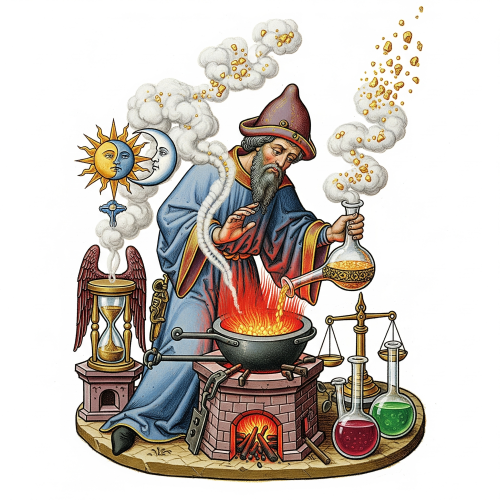
This course is an exploration of Stanislas Klossowski de Rola’s The Secret Art of Alchemy, a landmark work that unveils the symbolic, philosophical, and spiritual dimensions of alchemy as a living tradition. Far from a mere proto-science, alchemy is presented here as an art of inner transformation, where the opus (the Great Work) reflects both cosmic processes and the deep work of the psyche. Through close readings, visual analysis of alchemical engravings, and Jungian amplification, participants will examine The stages of the alchemical opus (nigredo, albedo, rubedo) as metaphors for psychological death, purification, and integration, the rich visual language of alchemical emblems, drawings, and mandalas as symbolic maps of transformation, the philosophical and mystical roots of alchemy, including Hermeticism and Renaissance esotericism, and an overview of alchemy as a mirror of individuation, in which the alchemical vessel becomes the container of psychic wholeness. Participants will leave with a deeper understanding of alchemy as both an ancient spiritual practice and a profound psychological metaphor for creative and therapeutic transformation.
This seminar explores the symbolical nature of consciousness through the lens of the Hermetic tradition and its enduring lineage across Western esoteric history. In every age, there are those who tend the hidden flame of wisdom—custodians of insight who preserve the soul’s deeper knowledge during times of cultural darkness. This course traces this lineage of Hermetic consciousness, from the theosophical and alchemical visions of figures such as Robert Fludd and Jakob Boehme, to the Rosicrucian manifestos and the Pan-Sophic movement, beginning with the Confessio Fraternitatis. We will examine pivotal moments where this current of wisdom confronted historical upheavals, including the Battle of White Mountain (1620) and its impact on the European imagination. Through readings, discussions, and symbolic analysis, students will engage the ongoing struggle for wisdom to prevail—exploring how the Hermetic tradition invites a rebirth of consciousness in every generation, shaping what we might call an “emerging Renaissance” in our own time.
This course offers an in-depth exploration of Leigh McCloskey’s Tarot Revisioned, a visionary reimagining of the Tarot as an archetypal language of the soul rather than a system of divination. Through McCloskey’s intricate, symbol-rich artworks and commentaries, students will engage the Tarot as a living mandala of consciousness, tracing its alchemical, mythological, and Jungian dimensions. Emphasis will be placed on how McCloskey’s work illuminates the Tarot as a dynamic tool for self-reflection, creative awakening, and the deepening of imaginal intelligence.
This seminar will focus on the skill and use of cultivating and strengthening the capacity to observe one’s inner process in psychotherapeutic work. It will focus on Buddhist Psychological roots of this process, while also covering Psychoanalytic, Jungian, and Somatic Psychotherapy (Hakomi) theories. A basic understanding of the principles of Buddhist Psychology will be discussed. The importance and function of the inner witness will be traced through the three main schools of Buddhism- Hinayana, Mahayana, and Vajrayana- with a specific focus on the Mahayana concept of Bodhicitta. The clinical benefit of building a strong inner witness will be discussed, specifically as it relates to transference, countertransference, affect tolerance, mirroring, empathetic listening, the transcendent function, memory reconsolidation, and the creation of new neural pathways.
AION 415– The Gnostic Tradition and Psychodynamic Psychotherapy (3 sessions, 6 hours, No CE, $420). Prerequisite: None.
This course explores Gnosticism and its relevance to depth-oriented and psychodynamic clinical practice. Gnosticism was not only an early, unorthodox expression of Christianity, but—according to Carl Jung—it projected an intricate theology that provides us a psychological blueprint of the Western psyche as it emerged from the ancient world and gradually took the form of modern culture. From this perspective, engaging with Gnostic material becomes a necessary step in deciphering the unconscious conflicts and forms of psychological suffering that continue to trouble the modern Western psyche. Key themes include Gnostic creation myths, the archetype of Sophia, and Jung’s sustained engagement with Gnostic symbolism and cosmology. Emphasis will be placed on amplifying Gnostic thought through a Western psychological lens, highlighting its relevance for contemporary psychodynamic therapeutic work. Clinical implications for assessment and case formulation will be explored throughout. The material is presented conceptually rather than religiously, and no prior knowledge of Gnosticism is required.
Costs & Practicalities
Aion Institute courses generally cost $70 per hour (this may vary slightly). Most, but not all, of our elective courses offer CE credit; please see individual course listings for details.
These elective courses may be “audited” on their own, and also may be applied towards completion of one of our Certificate Programs, each of which require at least 8 hours of this content.
The Aion Institute is approved by the California Psychological Association to provide continuing professional education for psychologists. The Aion Institute maintains responsibility for this program and its content. The California Board of Behavioral Sciences (BBS) now recognizes CE credit offered by any CPA-approved provider for license renewal for its licensees.