
AION 403 Course Evaluation
Course Description
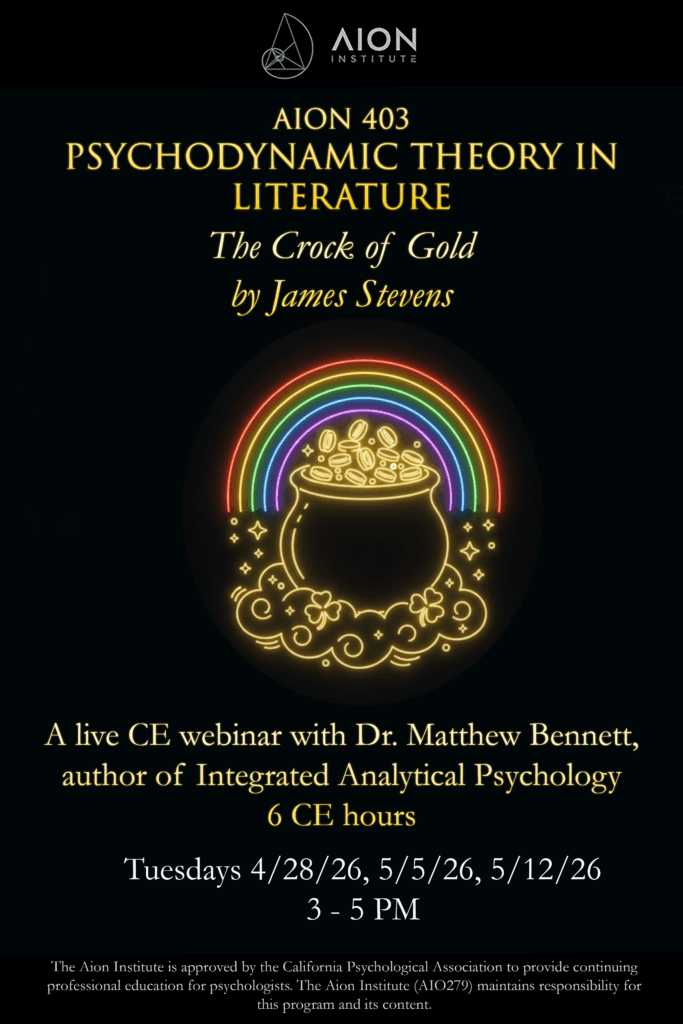
This installment of the Aion Literary Discussion Group is structured around The Crock of Gold by James Stephens, a mythopoetic novel that blends folklore, philosophical inquiry, humor, and psychological depth. The text offers a rich symbolic meditation on freedom and constraint, instinct and civilization, eros and law, and the tension between innocence and moral awakening—making it particularly resonant for advanced clinical reflection.
The seminar will proceed as a shared reading experience. Approximately half of each session will be devoted to close discussion of the assigned chapters, with attention to narrative structure, symbolic imagery, character dynamics, and philosophical themes. The remaining time will be devoted to didactic material selected by the instructor to amplify the psychological and clinical relevance of the text, drawing on psychodynamic, Jungian, and archetypal perspectives.
Curricular Notes
The content will be organized as follows:
Session 1 – Chapters 1–6: Orientation, Innocence, and the Mythic Field
Clinical–didactic emphasis
- Myth as psychological container
- Archetypal innocence and instinctual life
- The function of humor as defense and revelation
- Pre-reflective consciousness and psychic spontaneity
Session 2 – Chapters 7–12: Conflict, Law, and the Birth of Moral Consciousness
Clinical–didactic emphasis
- Superego formation and moral injury
- The transition from instinctual life to ethical self-awareness
- Shame, guilt, and conscience as developmental forces
- Cultural and symbolic prohibitions
Session 3 – Chapters 13–18: Integration, Paradox, and the Tragicomic Human Condition
Clinical–didactic emphasis
- Integration vs. solution
- Tragicomic consciousness (holding joy and sorrow together)
- Ethical maturity and psychological depth
- The therapist’s stance toward meaning, limitation, and grace