
AION 305 Course Evaluation
Course Description
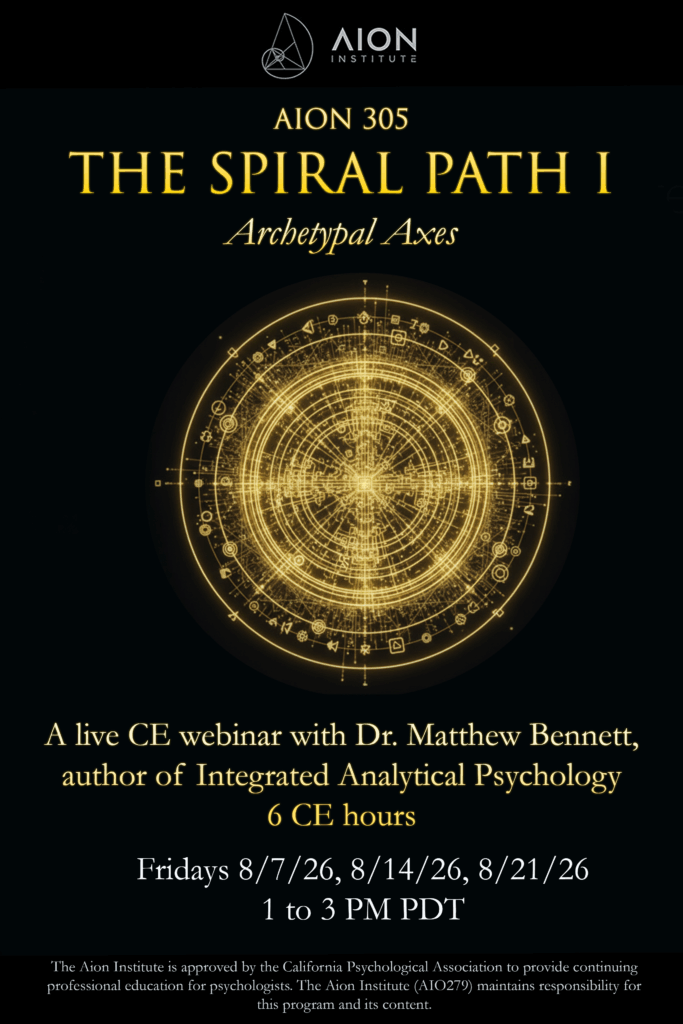
This seminar introduces the horizontal dimension of Integrated Analytical Psychology through the Circumplex Model and the Archetypal Axes. Participants will explore how the interplay of archetypal forces—Christ and Lilith, Transcendent Self and Unique Identity—creates a dynamic map of personality structure and transformation. By combining the vertical harmonic progression of mental representations with the circular geometry of archetypal themes, this model provides a holistic framework for understanding personality types, defensive styles, and developmental trajectories. The session will include lecture, discussion, and applied exercises, focusing on the clinical and symbolic implications of the four quadrants and their spiral path toward integration.
Curricular Notes
Horizontal dimensionality and symbolic polarity
AION 305 inaugurates the Spiral Path sequence, introducing the horizontal dimension of personality organization that complements the vertical Harmonic Progression (AION 303–304). Where the Harmonics describe levels of mental representation, the Archetypal Axes articulate directions of psychic force. By bringing these dimensions into dialogue through the Circumplex Model, this course provides clinicians with a two-dimensional map of personality, allowing for nuanced understanding of defensive style, motivational polarity, and transformational movement. It establishes the geometric and symbolic foundation for subsequent Spiral Path courses focused on ethics, character, and mature integration. This course enables clinicians to conceptualize psychological conflict as tension between archetypal forces, rather than as pathology to be eliminated.
Open Evaluation
The Aion Institute is approved by the California Psychological Association to provide continuing professional education for psychologists. The Aion Institute (AIO279) maintains responsibility for this program and its content.