AION 301 Course Evaluation
Course Description
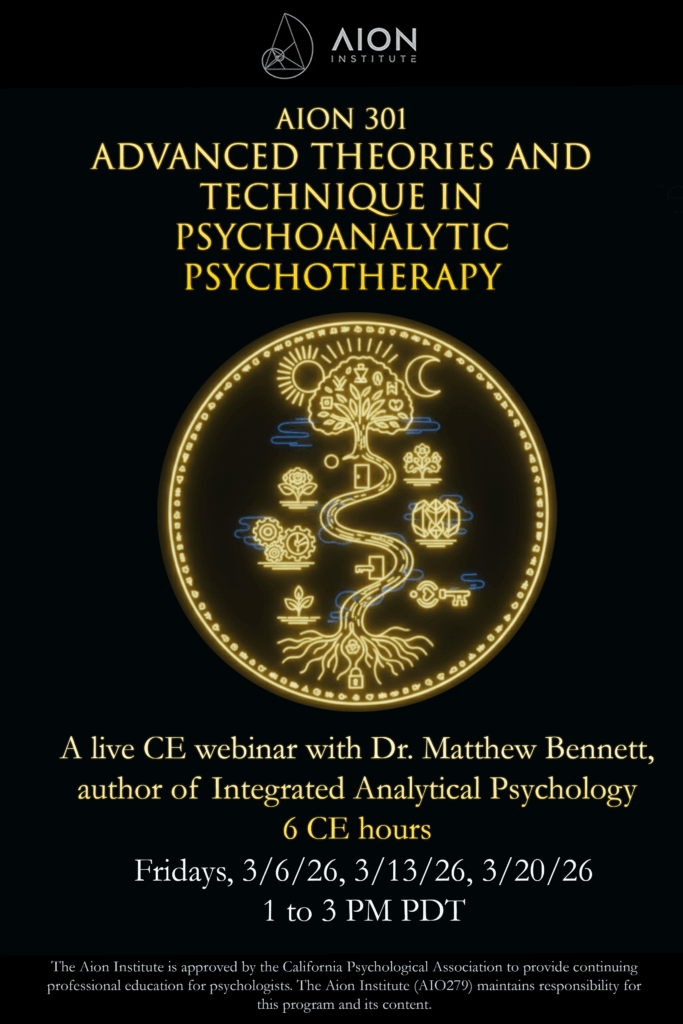
This advanced course expands upon the foundational psychoanalytic perspectives introduced in AION 201 and 203, offering a deeper engagement with contemporary psychoanalytic theory and practice. Topics include the intersubjective turn in psychoanalysis as articulated by Robert Stolorow, Philip Bromberg, and Jessica Benjamin; the intersections between modern psychoanalysis and current research on the neurobiology of attachment; and an accessible introduction to key concepts in Lacanian theory. Through lectures, case discussions, and comparative analysis, participants will strengthen their conceptual framework for working with complex relational dynamics and unconscious processes in clinical settings.
Curricular Notes
Intersubjective and relational consolidation
AION 301 marks a decisive shift from structural and developmental psychoanalysis into explicitly relational and intersubjective thinking. By engaging the work of Stolorow, Bromberg, and Benjamin, the course reframes therapeutic action as a co-constructed process shaped by mutual influence, dissociation, rupture, and recognition. The introduction of Lacanian concepts serves as a disciplined encounter with language, subjectivity, and desire—challenging clinicians to refine how they listen, interpret, and locate meaning within the analytic field. This course matures the clinician’s capacity to tolerate ambiguity, mutuality, and ethical responsibility within the therapeutic relationship, preparing them for work with complex relational dynamics and unconscious enactment.